Choosing a secondary school in Singapore can feel like a national sport, complete with PSLE score ranges, DSA deadlines, school codes, open houses and enough acronyms to make even very calm parents start colour-coding spreadsheets.
For local families, the big question is usually which school gives their child the right mix of academic challenge, culture, commute and future pathways. For expat families, there is an extra layer: whether to aim for a mainstream MOE school, an international school, or a globally recognised curriculum that keeps future moves open.
This guide gives you a practical look at some of the top secondary school options in Singapore, what each school is known for, how the pathways work, and how to choose the best secondary school for your child.
How secondary school works in Singapore
In Singapore, “high school” is usually called secondary school. Students typically enter Secondary 1 after the PSLE, then move towards a pathway that may lead to the Singapore-Cambridge Secondary Education Certificate, junior college, polytechnic, the IB Diploma, or another specialised qualification.
All the terms can start to look a bit like alphabet soup, so here’s a breakdown of the terms parents will see most often and what they mean:
| Term |
What it means |
| PSLE score |
The score used for Secondary 1 posting. Lower scores are more competitive. |
| Posting Groups |
Placement groups used under Full Subject-Based Banding. |
| Full Subject-Based Banding |
Students can take subjects at different levels based on their strengths. |
| Integrated Programme |
A six-year route that bypasses the Secondary 4 national exam and leads to A-Levels, IB, or another diploma. |
| DSA-Sec |
Direct School Admission based on talent, strengths, or aptitude beyond PSLE results. |
| Junior college |
A pre-university route, usually leading to A-Levels. |
| IB Diploma |
A globally recognised pre-university qualification offered by some local and international schools. |
MOE SchoolFinder is the best official place to confirm each school’s latest PSLE score range, programmes, CCAs, subjects and admission details. Score ranges can change each year, so treat them as a guide rather than a permanent ranking.
Find out more about the enrolment process to secondary schools in Singapore in our complete guide.
Top secondary schools in Singapore to consider
Raffles Institution
- Best for: academically strong boys who thrive in a fast-paced, high-opportunity environment
- Location: Bishan
- Type: Boys (co-ed for Year 5 and Year 6)
- Pathway: Integrated Programme to A-Levels
Raffles Institution stands out for the sheer scale of its IP ecosystem. Beyond being one of Singapore’s most competitive boys’ schools, it offers School-based Gifted Education, the Music Elective Programme, the Regional Studies Programme and EMaS, which makes it especially strong for boys who want academic stretch alongside language, humanities, music, or regional interests.
RI may suit a student who is self-directed and keen to use the school’s many platforms rather than simply survive the pace. The DSA spread is also broad, covering areas such as mathematics, science, leadership, communication, music, visual arts, and multiple sports, so it’s worth looking at RI as a whole-school opportunity hub, not just an exam-results name.
Raffles Girls’ School
- Best for: academically strong girls looking for challenge, enrichment, and a confident school culture
- Location: Braddell/Bishan area
- Type: Girls
- Pathway: Integrated Programme to A-Levels
Raffles Girls’ School is distinctive for the way it frames high ability through inquiry, advocacy and leadership, not just academic acceleration. Alongside the IP and School-based Gifted Education, RGS offers the Music Elective Programme and Regional Studies Programme, with school-based emphasis on areas such as Inquiry & Advocacy, Research Studies, and service learning.
This may suit girls who enjoy asking sharp questions, writing, debating, leading initiatives, or turning ideas into community action. Compared with some other top girls’ schools, RGS has a particularly strong thinker-leader-advocate feel, so the fit is best for students who want challenge with a strong voice, not just a neat report card.
Hwa Chong Institution
- Best for: boys looking for academic rigour, bilingual strength, and leadership opportunities
- Location: Bukit Timah
- Type: Boys
- Pathway: Integrated Programme to A-Levels
Hwa Chong Institution stands out for its deep bicultural and Chinese-language ecosystem. As a SAP/IP school, it offers the Bicultural Studies Programme, Language Elective Programme (Chinese), Art Elective Programme, and School-based Gifted Education, which makes it especially relevant for boys with strong Higher Chinese, humanities, China studies, or regional interests.
It may suit students who want a traditional, high-performing school environment with serious breadth beyond the core curriculum. HCI’s DSA areas include bilingualism, Chinese language, humanities, entrepreneurship, mathematics and science, so it’s not only about academic rigour; it is also one of the clearest fits for families who value bicultural confidence and leadership.
Dunman High School

- Best for: co-ed students looking for a six-year SAP/IP pathway
- Location: Kallang/Tanjong Rhu
- Type: Co-ed
- Pathway: Six-year Integrated Programme to A-Levels
Dunman High School is one of the clearer choices for families who want a co-ed SAP/IP school rather than a single-sex route. Its six-year programme keeps students on one campus from secondary through pre-university years, with the Bicultural Studies Programme, Language Elective Programme (Chinese), and Music Elective Programme giving it a strong bilingual and arts-academic profile.
The school may suit students who want the intensity and cultural grounding of a SAP/IP education, but in a co-ed setting with a through-train feel. Its Kallang/Tanjong Rhu location also makes it a strong contender for families in the East, city fringe and central areas who do not want every school day to involve a cross-island expedition.
Nanyang Girls’ High School
- Best for: girls seeking a strong SAP/IP school with bilingual culture
- Location: Bukit Timah
- Type: Girls
- Pathway: Integrated Programme to Hwa Chong Institution
Nanyang Girls’ High School is often mentioned alongside Hwa Chong, but its personality is distinct: a girls’ SAP/IP school with a strong Chinese cultural spine. It offers the Bicultural Studies Programme, Language Elective Programme (Chinese), Art Elective Programme, and School-based Gifted Education, with DSA areas that include bilingualism, Chinese calligraphy, Chinese dance, Chinese orchestra, and even lion and dragon dance.
That makes Nanyang especially compelling for girls who are academically strong but also drawn to language, culture, performance, or service leadership. It’s a highly structured, high-achieving environment, so parents should look beyond the famous name and ask whether their daughter would genuinely enjoy the school’s bilingual and cultural expectations.
Anglo-Chinese School (Independent)
- Best for: boys interested in IB, sport, leadership, and a comprehensive school life
- Location: Dover
- Type: Boys (co-ed for Year 5 and Year 6)
- Pathway: IP/IB and O-Level route
Anglo-Chinese School (Independent), usually called ACS(I), is known for providing families with a major local-school route into the IB Diploma rather than the standard A-Level pathway. It also offers the Integrated Programme, School-based Gifted Education, Music Elective Programme, and Regional Studies Programme, making it attractive for boys who want a globally recognised senior pathway without moving straight into an international school.
ACS(I) may suit boys who are strong all-rounders: academic, sporty, musical, service-minded, or comfortable in a lively school culture. For expat families weighing local versus international options, ACS(I) often stands out because the IB is portable, while the school itself still sits firmly within Singapore’s competitive local education system.
Methodist Girls’ School
- Best for: girls looking for a values-led school with access to the IB pathway
- Location: Bukit Timah
- Type: Girls
- Pathway: IP to ACS(I) IB and O-Level route
Methodist Girls’ School stands apart from other top girls’ schools because of its Methodist heritage and its IP link to ACS(I)’s IB pathway. It also offers both IP and non-IP options, so families can compare a through-train IB route with a more conventional secondary pathway within the same school environment.
MGS is also more distinctive than a generic strong girls’ school label suggests. Its DSA areas include Music Elective Programme, computational thinking, bowling, artistic swimming, football, netball, and English language, which gives it a nice mix of academic, creative, and slightly less predictable talent routes.
National Junior College
Best for: students who want a co-ed through-train IP environment
Location: Bukit Timah
Type: Co-ed
Pathway: Six-year Integrated Programme to A-Levels
Despite the name, National Junior College offers a secondary-level IP route as well as the junior college years. That can suit students who are ready for a more mature, research-based culture and like the idea of growing into pre-university learning in one institution.
NJC’s DSA areas also give it a slightly different flavour from the more traditional elite schools, with options such as Art Elective Programme, Science for Sustainable Development, canoeing, dance, music groups, and sports. It may suit students who want academic challenge, but also breadth, independence and a co-ed campus that feels less like a standard secondary school.
CHIJ St. Nicholas Girls’ School
- Best for: girls seeking SAP culture, academics, and a strong school identity
- Location: Ang Mo Kio
- Type: Girls
- Pathway: IP to Eunoia Junior College and O-Level route
CHIJ St. Nicholas Girls’ School stands out because it combines SAP culture, Catholic/CHIJ heritage, and both IP and non-IP options. It’s part of the Joint Integrated Programme leading to Eunoia Junior College, but families also have the flexibility of a national-exam route within the same school.
Its school-specific programmes help sharpen the fit: the ALP focuses on STEM and sustainability through ‘Maker’s Fantasy’, while the LLP centres on community service and student leadership through ‘A Leader in Every St Nicks Girl’. This may suit girls who want a traditional school identity, a present bilingual culture, and practical leadership development.
Catholic High School
- Best for: boys looking for SAP, structure and a strong academic pathway
- Location: Bishan
- Type: Boys
- Pathway: IP to Eunoia Junior College and O-Level route
Catholic High School is a strong boys’ option for families who want SAP culture, a structured environment, and a clear pathway to Eunoia Junior College through the Joint Integrated Programme. It’s also a dual-route school, which gives families the choice between the IP and national secondary examination pathway.
What makes Catholic High stand out is the combination of disciplined bilingual grounding with a surprisingly broad DSA profile, including bilingualism, humanities, music, Chinese drama, English drama, wushu, volleyball, and mathematics/science routes. It may suit boys who do well with clear expectations but still need room to explore beyond the classroom.
Singapore Chinese Girls’ School

- Best for: girls seeking academics, character development and bilingual opportunities
- Location: Stevens/Novena area
- Type: Girls
- Pathway: IP to Eunoia Junior College and O-Level route
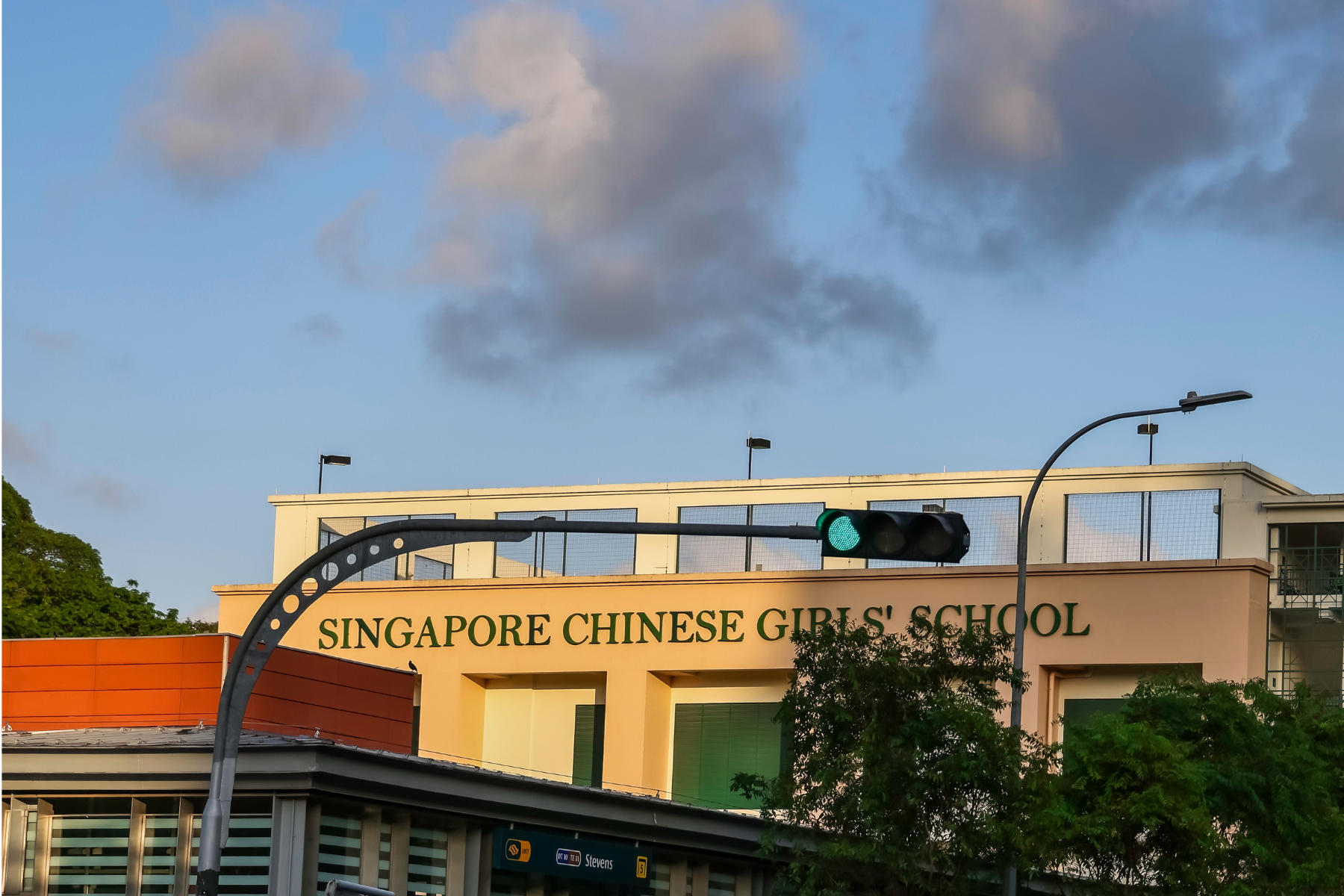
Singapore Chinese Girls’ School has a different feel from the SAP girls’ schools on this list. It is not simply another academic girls’ school; its appeal is a blend of tradition, central location, bicultural studies, strong character education, and a polished school culture that many parents find reassuring.
SCGS offers the IP route to Eunoia Junior College as well as non-IP options, with DSA areas including leadership, humanities, English language, choir, handbells, artistic gymnastics, netball, squash, and string ensemble. It may suit girls who want academic stretch with a warmer, more rounded identity rather than a narrowly exam-driven environment.
Cedar Girls’ Secondary School
- Best for: girls strong in academics, leadership and CCAs
- Location: Toa Payoh/Potong Pasir
- Type: Girls
- Pathway: IP to Victoria Junior College and O-Level route
Cedar Girls’ Secondary School stands out for its place in the Victoria-Cedar Alliance, where IP students spend four years at Cedar before moving to Victoria Junior College. That gives families an A-Level IP route with a distinctly East/central-north-east flavour, rather than the usual Bukit Timah-heavy shortlist.
Cedar may suit girls who want academic stretch, energetic CCAs, and a strong sense of school spirit. Because it offers both the SEC route and the VCA IP, it’s useful for families who want choice, especially if their daughter is strong but not necessarily looking for the most tradition-heavy or pressure-cooker girls’ school environment.
Victoria School
- Best for: boys looking for heritage, academics and East Coast school culture
- Location: Siglap/Marine Parade
- Type: Boys
- Pathway: IP to Victoria Junior College and O-Level route
Victoria School is distinctive for its East-side identity and its role in the Victoria-Cedar Alliance. Boys can take either the four-year SEC route or the six-year VCA Integrated Programme, spending four years at VS before moving to Victoria Junior College for the final two years.
The school may suit boys who want academic challenge with strong school spirit, sport, uniformed groups, leadership, and performance opportunities. For families in Marine Parade, Siglap, Bedok and Katong, the commute can be a real advantage; for everyone else, test the CCA-day journey before falling in love with the name.
NUS High School of Mathematics and Science
- Best for: students with serious strength in maths, science and research
- Location: Clementi
- Type: Co-ed
- Pathway: NUS High School Diploma
NUS High School of Mathematics and Science is the outlier on this list, which is exactly why it matters. It’s a specialised independent school offering its own six-year NUS High School Diploma, with admissions through DSA rather than the normal S1 Posting Exercise.
The school is best for students who genuinely love maths, science, research, and problem-solving, not just students who happen to score well in those subjects. Its curriculum includes areas such as mathematics and statistics, physics and engineering, computer science, and research, innovation and enterprise, so it suits children who would rather investigate a hard problem than simply memorise the model answer.
School of the Arts Singapore
- Best for: students with serious talent in the arts and strong academic potential
- Location: Dhoby Ghaut
- Type: Co-ed
- Pathway: Six-year arts-focused pathway
School of the Arts Singapore, usually called SOTA, is another specialised independent school that does not participate in the normal S1 Posting Exercise. Students apply through DSA, with talent areas spanning visual arts, music, dance, theatre, literary arts, film, media arts, debate, photography, and more.
SOTA is the right shortlist choice when a child’s creative ability is not a hobby on the side, but a serious part of how they learn and express themselves. It still requires academic discipline, but its biggest distinction is that artistic training sits at the centre of school life, which can be transformative for the right student and completely wrong for one who only wants a weekly CCA.
How to choose the right secondary school in Singapore
Start with your child, not the school’s reputation
Ask whether your child thrives under pressure, prefers structure or independence, enjoys exams or projects, and would feel more comfortable in a single-sex or co-ed environment. The most famous school is not automatically the best one for your child.
Compare the pathway, not just the score range
Look at whether the school leads to A-Levels, IB, polytechnic routes, a specialised diploma or another post-secondary option. If the school offers IP, check where that pathway leads and whether your child is suited to bypassing the national exam milestone.
Take the commute seriously
Singapore is compact, but school commute still matters. A 35-minute journey can become exhausting once you add CCA, rainy mornings, group projects, and peak-hour buses. If you are relocating, shortlist schools before locking in a neighbourhood.
Visit open houses and read the room
Open houses are useful, but do not only listen to the polished presentation. Watch the students. Do they seem confident, tired, warm, competitive, happy? The feel of a school can tell you things a score range never will.
Moving closer to the right school in Singapore
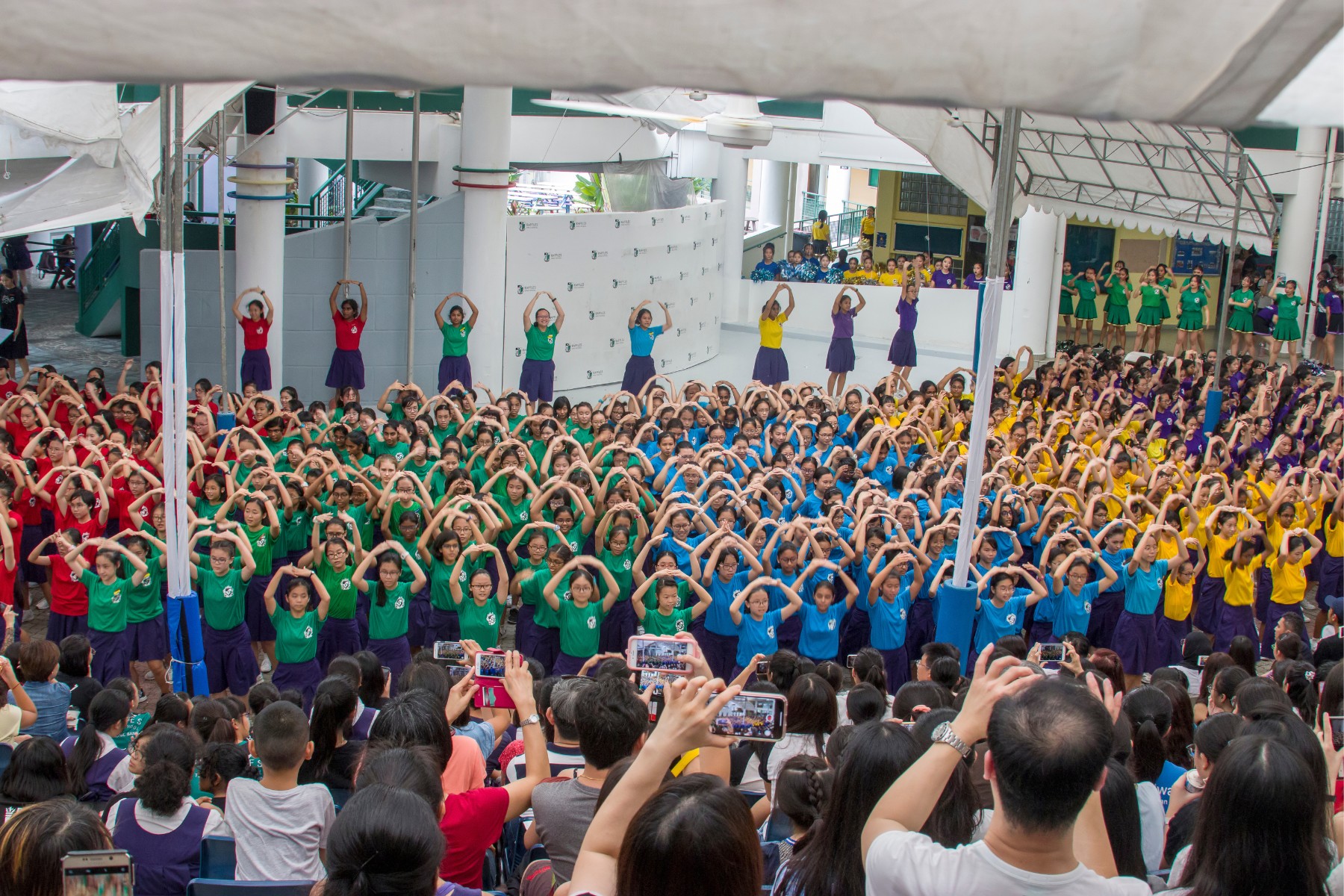
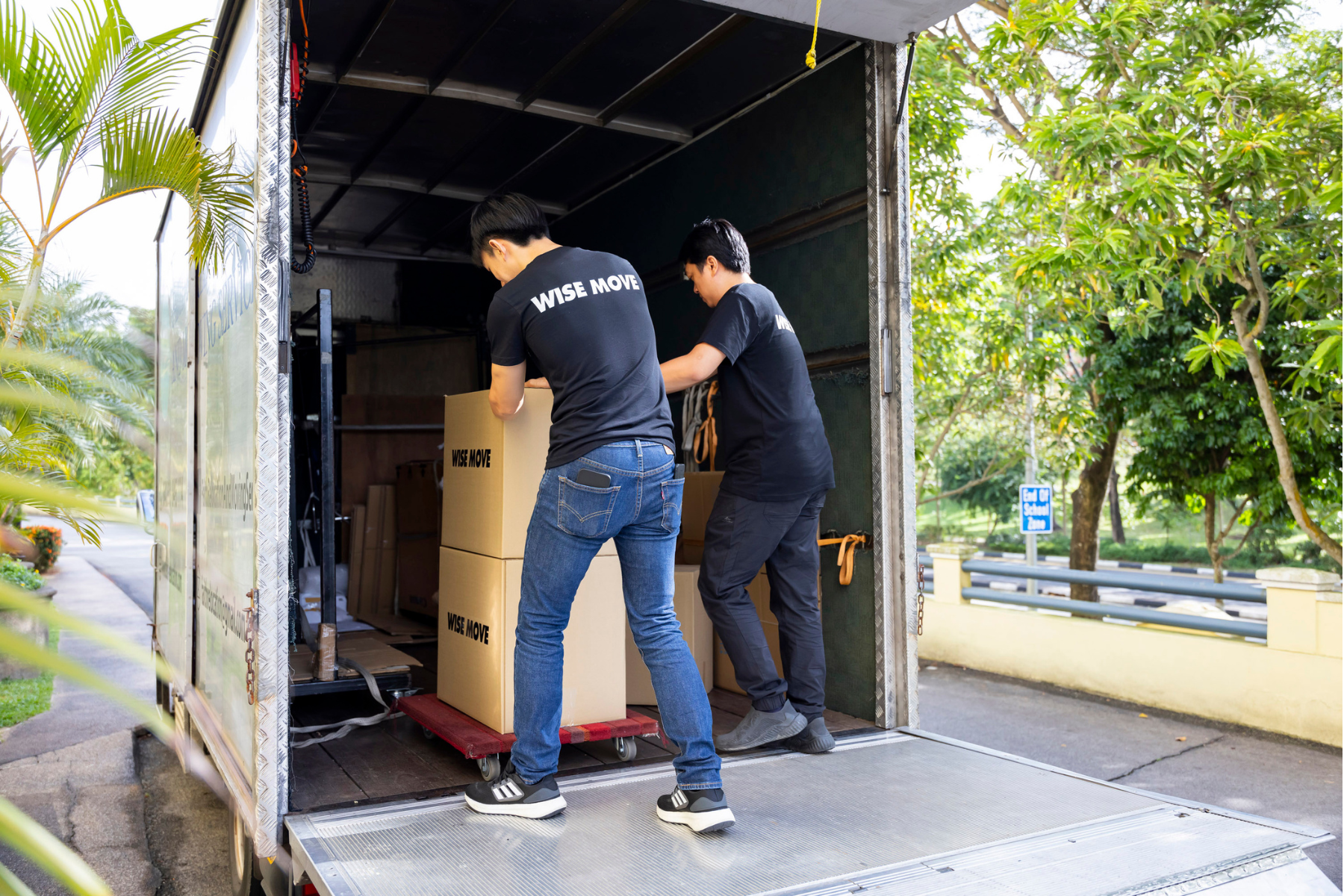
 Wise Move moving team loading boxes into truck in Singapore" />
In Singapore, the right school can shape your child’s routine, friendships, commute and family life. Sometimes the practical next step is not only submitting the school choices, but working out where your family should live so the daily journey is manageable.
If you are moving home before the new school year, Wise Move can help you compare trusted movers and packers in Singapore, so the move feels less like another exam paper on the family table.
A good school fit matters. A sane morning commute helps too.



 Wise Move moving team loading boxes into truck in Singapore" />